


Why We Built It
Most people don’t realise that certain chemical compounds and essential oils can trigger seizures – not just when ingested, but in some cases through smell alone. Eucalyptus is one well-known example. There are many others.
For families living with epilepsy, every product that comes into the house is a potential decision. Cleaning products, cosmetics, toiletries, food. The standard approach is to crouch in a supermarket aisle, squinting at a tiny label, cross-referencing against a list you’re trying to remember, hoping you haven’t missed anything.
We built EPCheck because we were living that experience. It was never going to be a commercial product – it just needed to exist. So we built it.
What It Does
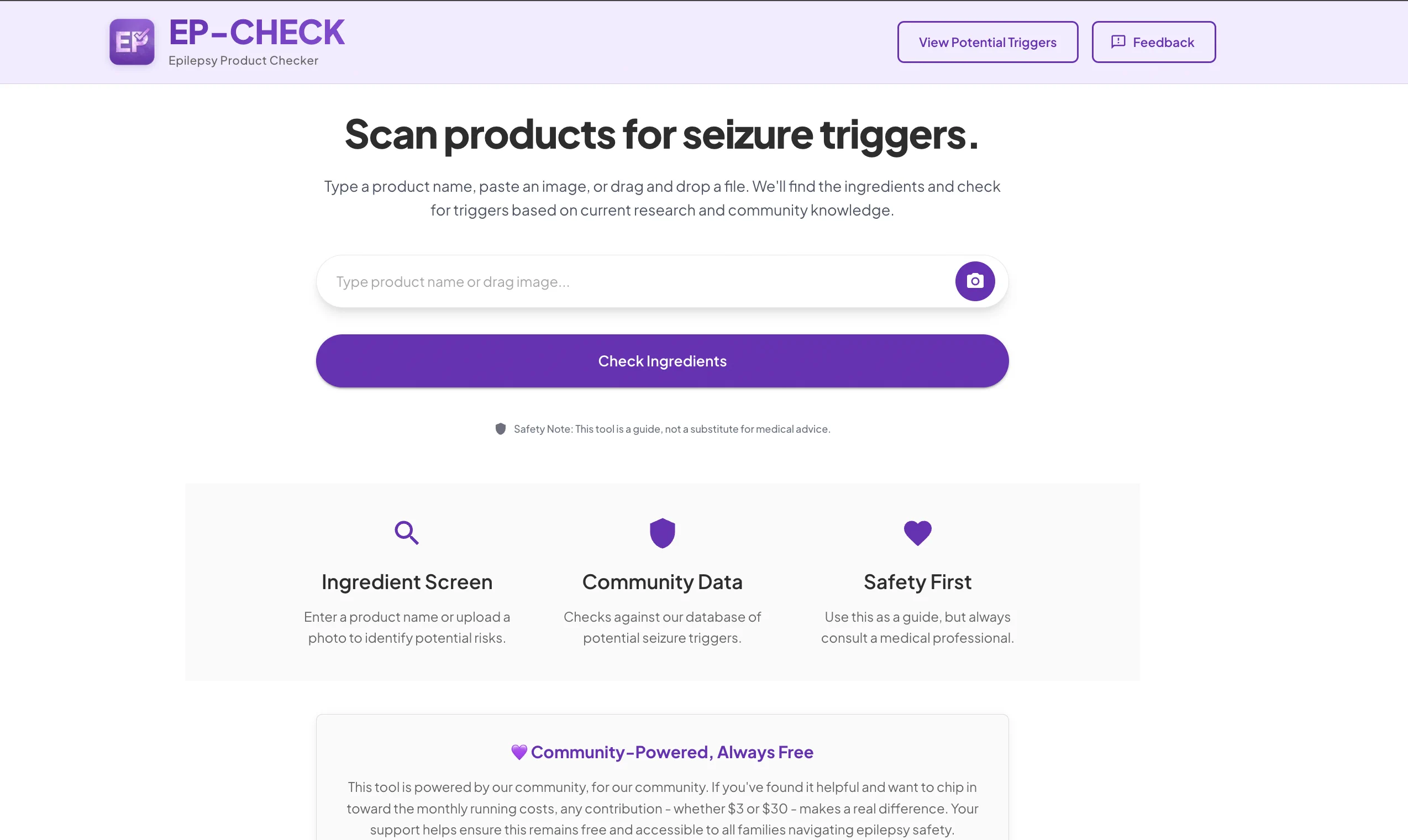
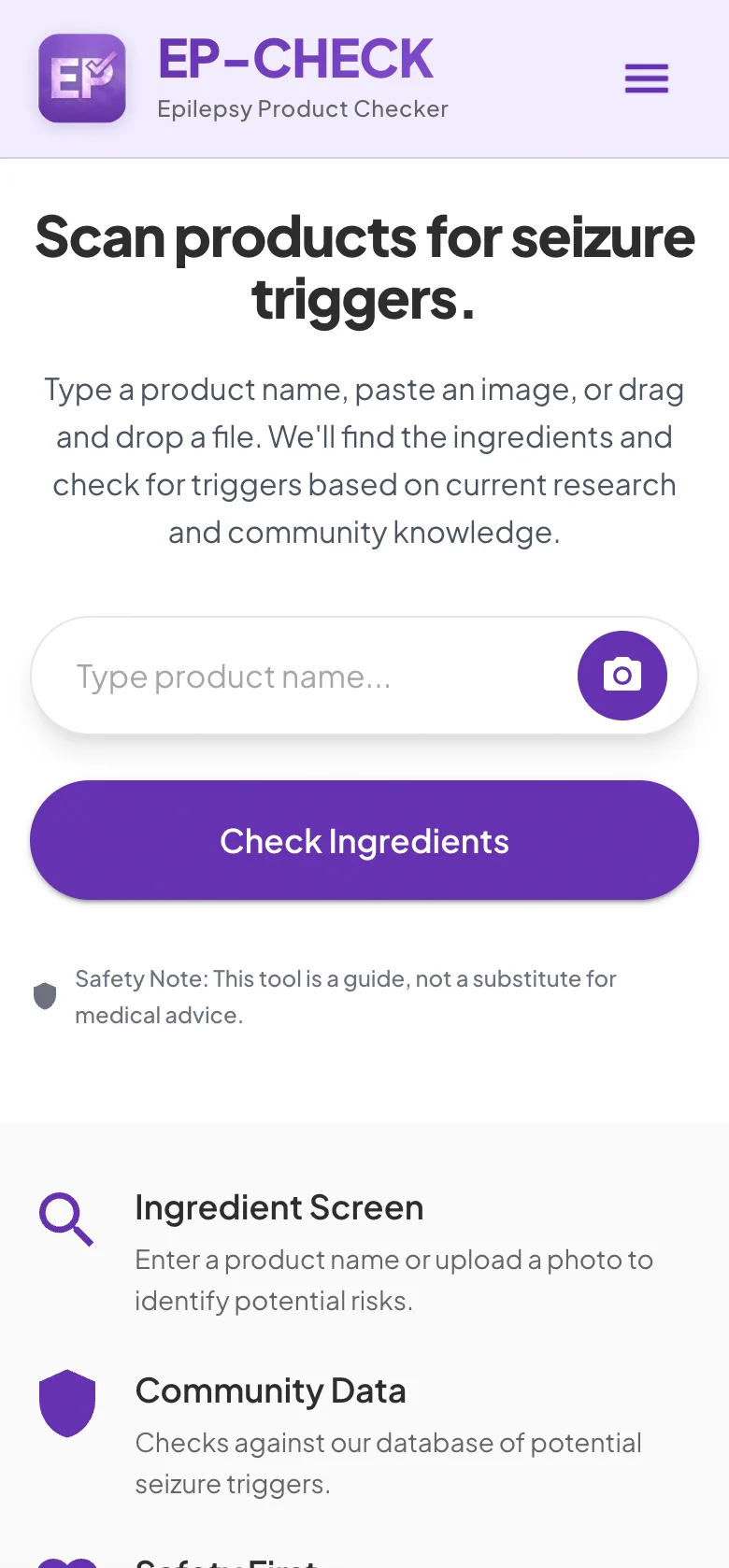
EPCheck is a free ingredient-checking tool for people living with epilepsy. Open it in any browser – no download, no account. Type a product name or upload a photo of the label. Within seconds, EPCheck checks the ingredients against a database of known and suspected seizure triggers.
It’s designed to be used in the moment – in the supermarket, the pharmacy, a friend’s bathroom – wherever you need a quick, reliable answer.
Each flagged ingredient comes with context: the risk level, how exposure occurs (topical, inhalation, or ingestion), what the evidence shows, safer alternatives, and how quickly a reaction might occur. Not just a red flag – enough information to make a decision.
How We Built It
We started with peer-reviewed research – established studies that identified the compounds most commonly associated with seizure risk. That’s the foundation. We didn’t guess, and we didn’t crowdsource from the start. We built on what the science already knew.
On top of that, we built community feedback loops in from day one. Users can report ingredients they’ve found problematic, flag gaps in the database, and contribute to an ever-growing body of evidence. The ingredient list isn’t static – it grows as the community grows.
Safety-first wasn’t a design principle – it was the only acceptable approach. Every output includes a clear disclaimer. The tool surfaces information to help people make better decisions; it doesn’t replace medical advice, and it says so plainly every time.
EPCheck is a React PWA – it runs in any browser without installation, works on low-end devices, and is designed to be fast when you need it. Accessibility wasn’t bolted on: it was the starting point.
Who It’s For
EPCheck is for anyone who needs to make a quick, informed decision about product safety in an epilepsy-affected household.
- People living with epilepsy who manage their own safety
- Parents and carers shopping for someone with epilepsy
- Support workers and NDIS providers managing environmental safety
- Anyone in a household where epilepsy is part of daily life
You don’t need to be technical. You don’t need an account. You need a phone and a product to check.
Why It’s Free
EPCheck exists because we needed it ourselves, and then realised others did too. It was never going to be a commercial product.
Building it was an act of giving back to a community that has given us a great deal. EPCheck is always free to use – no account, no subscription, no paywall. If you find it useful and want to help cover the running costs, there’s an option to contribute. But it’s entirely optional, and the tool works exactly the same either way.
The community feedback that makes EPCheck better comes from people trusting us with their experiences. The least we can do is keep the door open.
“I didn’t know that these triggers existed. I’ve been using a decongestant that was – unbeknown to me – full of oils on the list. I’ve switched up the products I use based on this feedback.”
– Nicole, Victoria
What We Learned
Building EPCheck sharpened how we think about AI strategy. The temptation with AI tools is to move fast and deploy early. We didn’t. We spent the most time on what the AI shouldn’t do – defining the boundaries of the tool, building in the safety disclaimer, making sure every output was contextualised rather than just returned. Responsible AI isn’t a checklist you apply after the fact. It has to be the starting architecture.
We also learned something about lived experience as a design input. We knew the problem from the inside – and that changed every decision we made. Not because we were emotional about it, but because we knew exactly where the tool would be used, by whom, and under what conditions. That context is irreplaceable. You can’t research your way to it from the outside.
The ingredient-checking approach has broader applications – other communities navigating complex ingredient lists face the same problem. That’s on the backlog. For now, EPCheck does one thing, and it does it well.
Back to Products
Ready to start your accessibility journey?
Whether you’re at the beginning or already well on the way, we’re here to help you create design that works for everyone.